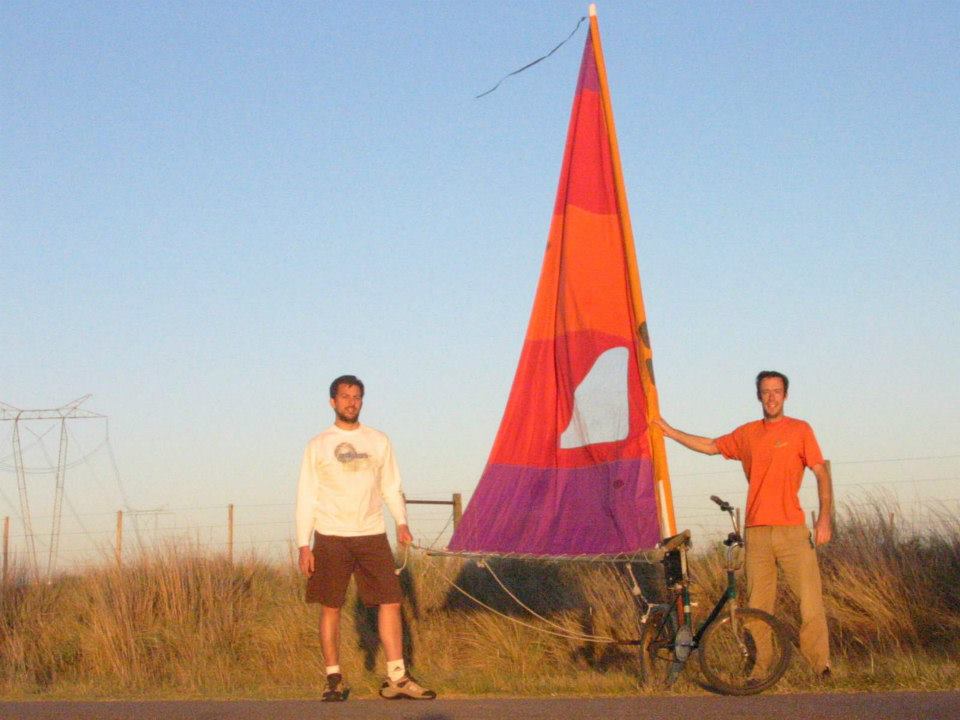
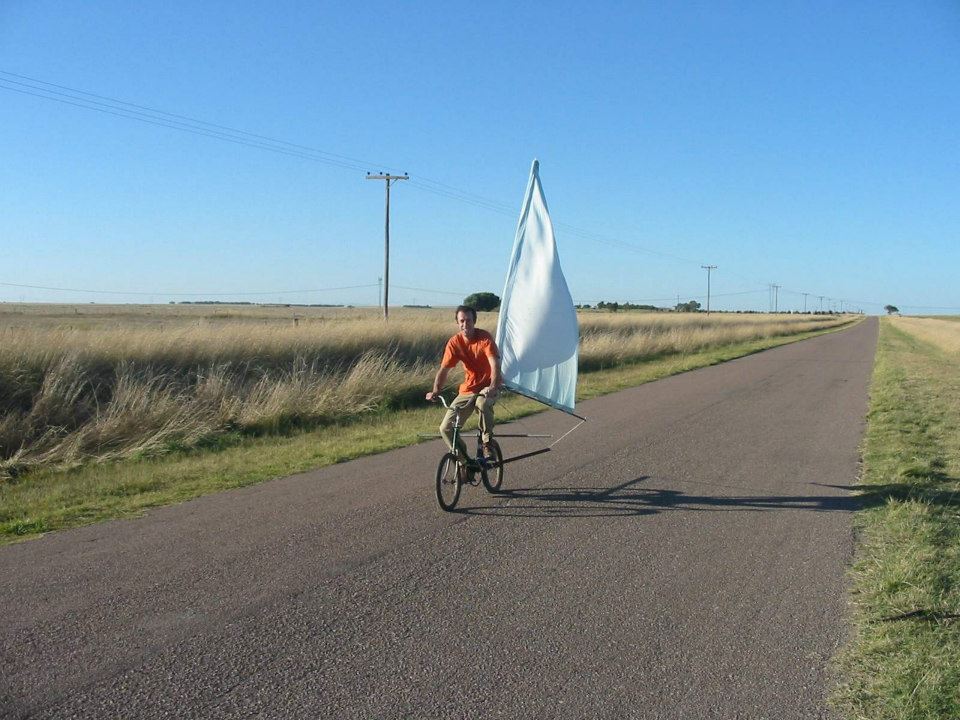
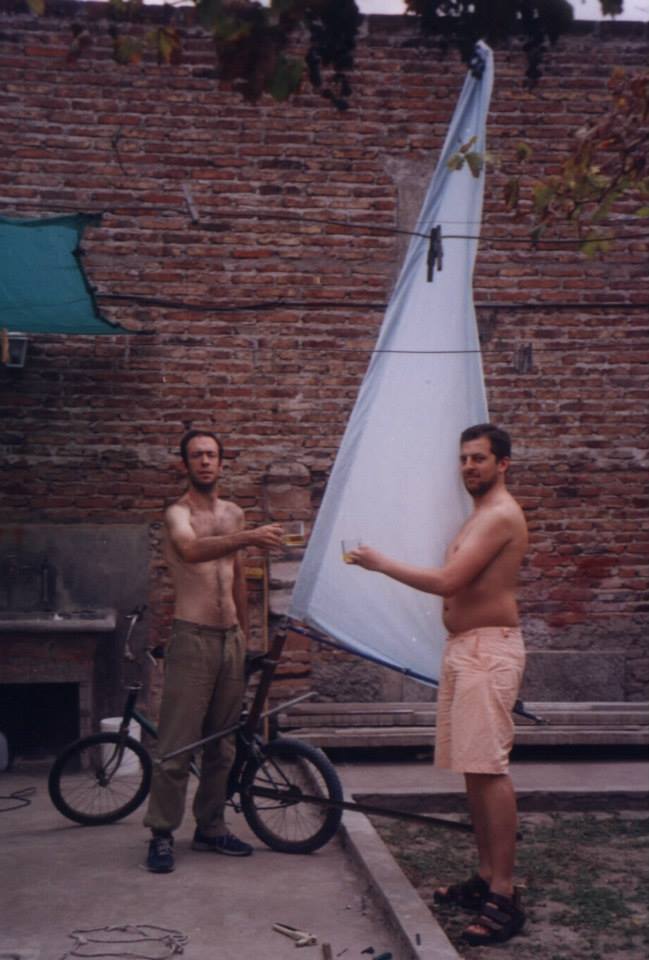
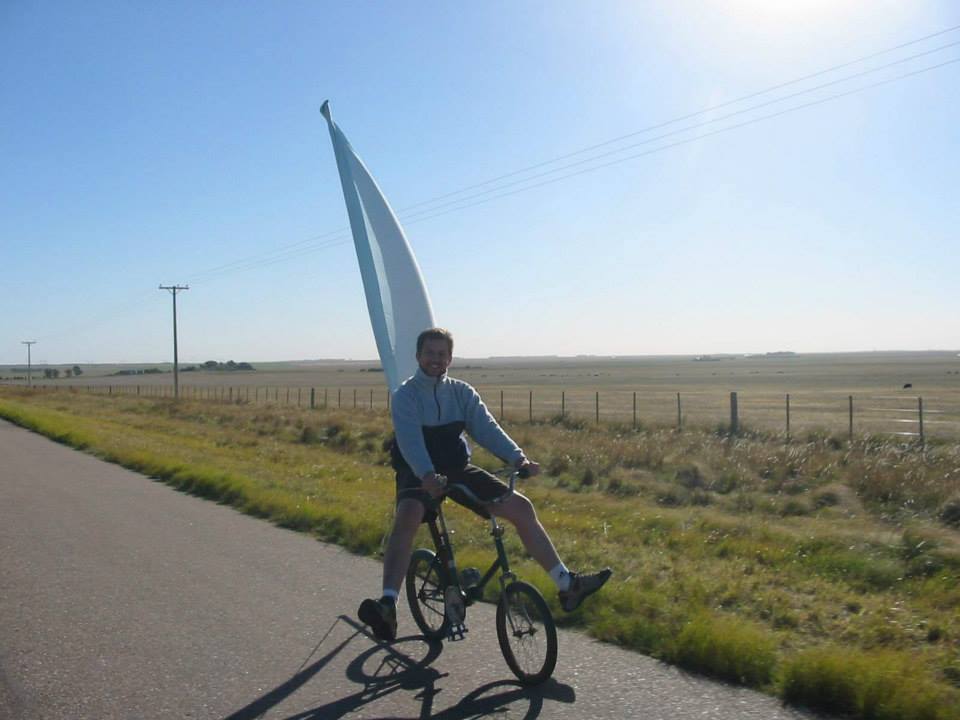
Sailing directly downwind is easy to understand: the wind blows into the sail and pushes against it. The wind is faster than the land sailer, so the air is decelerated by the sail. The sail pushes backward against the wind, so the wind pushes forward on the sail. But for a land sailer with a normal sail, the catch is that, downwind, you can only ever sail more slowly than the wind, which is usually not so exciting.
Sailing directly upwind is also easy to understand: it’s impossible. You just sit there with your sail flapping. This is also usually of little interest.
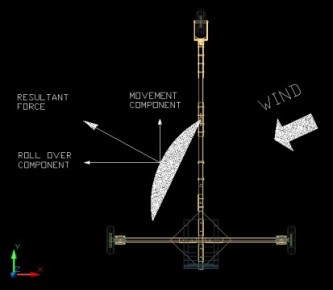
However, land sailers can sail at an angle—say, 45° to the wind—and by tacking (alternately traveling at 45° on either side of the incoming wind direction), they can go wherever they want.
To explain this, let’s look at Bernoulli’s principle…
Bernoulli’s principle can be derived from the principle of conservation of energy: energy can neither be created nor destroyed; it can only be transformed from one state to another.
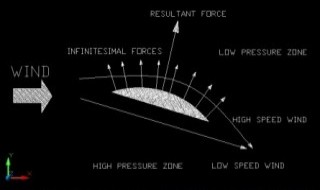
Air, as it approaches a sail, separates into an upper and lower stream (look at the pictures below). The upper stream moves faster across the curved surface, creating a lower pressure zone, while the lower stream moves more slowly along the flatter side.
High pressure on one side and low pressure on the other create a net aerodynamic force. The sail pushes the land sailer in the direction of this resultant force, driving it forward along its path of motion. That’s it!
Recommended sail size:
Basic rule: The higher the wind speed, the smaller the sail area.
For wind speeds below 45 km/h, the sail should be 4 m2 or larger.
For wind speeds above 45 km/h, the sail should be smaller than 4 m2.